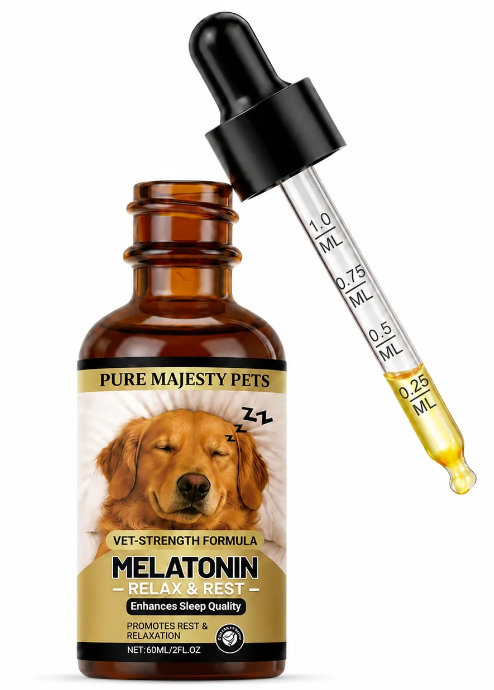
Dogs can experience occasional restlessness for many reasons. A thunderstorm may prevent one dog from settling, while travel, fireworks, household changes, or an unfamiliar environment may disrupt another dog’s normal routine. Senior dogs may also begin waking at unusual hours or pacing during the night.
Melatonin is sometimes used as part of a veterinarian-approved calming or sleep-support plan. However, owners should not assume that every restless dog needs a supplement or that every human melatonin product is safe for pets.
Understanding the cause of the behavior, choosing an appropriate formula, and monitoring the dog carefully are essential parts of responsible use.
Start by Looking at the Dog’s Routine
Before adding a supplement, consider whether the dog’s daily schedule may be contributing to the problem.
A dog that receives little physical activity or mental stimulation during the day may have difficulty settling at night. Late meals, inconsistent bathroom breaks, excessive evening excitement, environmental noise, or an uncomfortable sleeping area may also affect rest.
A predictable routine can make a significant difference. Meals, walks, playtime, and bedtime should occur at reasonably consistent times. The dog’s sleeping area should be quiet, comfortable, and protected from sudden light or sound whenever possible.
Restlessness that begins suddenly should not automatically be considered behavioral. Pain, digestive discomfort, urinary problems, medication effects, breathing difficulties, or neurological changes can also interrupt sleep.
See also: The Importance of Regular Electrical Inspections for Home Safety
What Is Melatonin?
Melatonin is a hormone naturally produced by the body. It helps regulate the internal sleep-wake cycle by communicating when it is time to rest.
Veterinarians sometimes use melatonin for sleep disturbances, certain behavior-related concerns, and selected skin conditions. Its use in an individual dog depends on the animal’s size, age, health history, medications, and the specific reason it is being considered.
Melatonin is not a traditional sedative, and results can vary. Some dogs may appear calmer or sleep more easily, while others may show little noticeable change. It should not be expected to correct severe anxiety or an undiagnosed medical condition by itself.
Situations in Which Owners Consider Melatonin
Dog owners commonly ask about melatonin in connection with:
- Fireworks and thunderstorms
- Travel or temporary changes in environment
- Difficulty settling at bedtime
- Age-related changes in the sleep schedule
- Mild situational nervousness
- Disruption caused by a new household routine
These situations do not all have the same cause. For example, a dog with a true noise phobia may need a structured behavior plan and prescription medication rather than a supplement alone.
Senior dogs that pace, vocalize, stare at walls, become disoriented, or reverse their normal day-and-night schedule should receive a veterinary examination. These changes can be associated with pain, vision loss, urinary disease, neurological conditions, or cognitive decline.
Choose a Product Made for Dogs
A dog-specific melatonin for dogs product is generally easier to evaluate than a human gummy or flavored sleep aid. The label should state the melatonin concentration, full ingredient list, serving directions, storage requirements, and any relevant warnings.
Liquid formulas can offer flexible measurement and may be easier to mix with food. Tablets provide a fixed amount but may be difficult to divide accurately. Chews are convenient, although owners should inspect their flavorings, sweeteners, calories, and inactive ingredients.
The format itself does not establish safety or quality. A transparent tablet may be more appropriate than a liquid formula that does not disclose its concentration.
Never Ignore the Inactive Ingredients
One of the most important safety concerns is xylitol. This sweetener may be found in human gummies, dissolvable tablets, and other flavored supplements. Xylitol is highly toxic to dogs and can cause a dangerous drop in blood sugar, seizures, liver injury, and potentially death.
Chocolate, caffeine, and concentrated combinations of unfamiliar herbal ingredients can also make a human sleep product inappropriate for a pet.
Owners should never rely only on the amount of melatonin shown on the front of the package. Every active and inactive ingredient must be reviewed. If the product’s complete composition cannot be confirmed, it should not be given to a dog.
If a dog consumes a product containing xylitol, contact a veterinarian or animal poison-control service immediately. Do not wait for symptoms to develop.
How to Compare Available Formulas
Owners researching the best melatonin for dogs should use objective selection criteria.
A suitable formula should provide:
- Clear Concentration Information
The amount of melatonin in each milliliter, dropper, tablet, or chew should be stated. This information is necessary for consistent measurement. - Weight-Based Directions
Dogs vary considerably in size. Instructions should account for body weight rather than giving every dog an identical serving. - A Complete Ingredient List
The label should identify all active and inactive ingredients and explicitly exclude xylitol. - Practical Administration
Choose a format that can be given calmly and consistently. Forcing tablets into an already anxious dog’s mouth can add stress to the situation. - Realistic Claims
Avoid products that guarantee the elimination of anxiety, promise identical results for every dog, or claim to replace veterinary treatment. - Accessible Quality Information
The company should provide contact information, storage directions, lot identification, and details about its manufacturing or quality-control process.
Introduce Melatonin Carefully
A veterinarian should determine whether melatonin is appropriate and recommend an amount for the individual dog. Owners should not estimate the serving by copying a dose intended for another pet.
The first use should ideally occur when the owner can observe the dog. Monitor alertness, coordination, appetite, digestion, and behavior. Excessive sleepiness, vomiting, unusual agitation, weakness, loss of coordination, or another unexpected reaction should be reported to a veterinarian.
Do not combine melatonin with prescription sedatives, calming medications, or multiple supplements unless a veterinarian has reviewed the combination. Additional ingredients can create interactions even when each product is available without a prescription.
More is not necessarily better. Giving an additional amount because the first serving did not produce an immediate change may increase the risk of adverse effects.
Combine Supplements With Environmental Support
Melatonin should be considered one possible part of a broader plan. During storms or fireworks, a dog may benefit from:
- A familiar room away from windows
- Closed curtains or blinds
- Background sound to reduce sudden noise
- Access to a preferred bed or crate
- Calm behavior from household members
- A food puzzle or other appropriate distraction
- Gradual desensitization outside the stressful event
For recurring fears, a veterinarian or qualified canine behavior professional can develop a structured plan. Supplements may support that plan, but they do not teach a dog new emotional responses on their own.
When Veterinary Care Is Essential
Consult a veterinarian before giving melatonin when a dog takes medication, has a chronic medical condition, is pregnant or nursing, is very young, or has experienced seizures or significant behavioral changes.
Prompt veterinary care is necessary when restlessness is accompanied by pain, breathing difficulty, repeated vomiting, collapse, confusion, loss of balance, difficulty urinating, or sudden weakness.
Melatonin may offer useful support for selected dogs, but safe use depends on accurate product information and individual guidance. A transparent, dog-specific formula combined with a stable routine and appropriate veterinary care provides a more responsible approach than experimenting with an unidentified human sleep product.